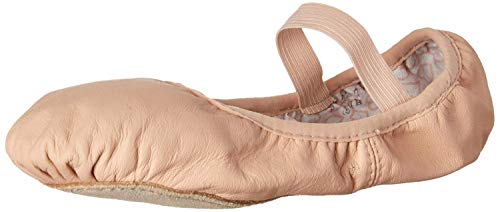
Bloch · Full sole
Bloch Belle Full-Sole Leather Child
A child-oriented full-sole leather Belle listing for programs that request traditional construction.
LeatherChildren
The dance decision studio
Compare soft slippers by sole, material, dancer, and dress code—then check the fit before the first plié.
Independent guidance · Pointe shoes require teacher approval and professional fitting
“Snug” means secure and smooth—not painful.
Start with the class requirement
Class Shoe Decoder
Use the wording from your studio. This narrows soft shoes only; it never evaluates pointe readiness.
3 sensible starting points
Bloch · Full sole
A child-oriented full-sole leather Belle listing for programs that request traditional construction.

Stelle · Full sole
A leather children’s option for programs requesting a durable traditional upper.
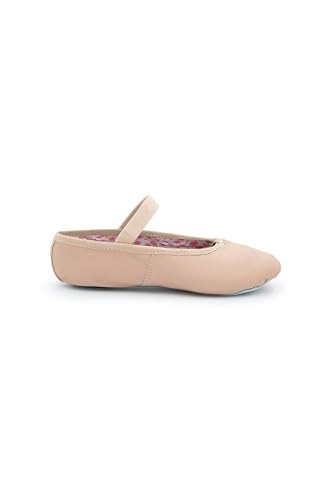
Capezio · Full sole
A beginner-oriented full-sole leather shoe with pre-attached crossed elastics.
Studio shortlists
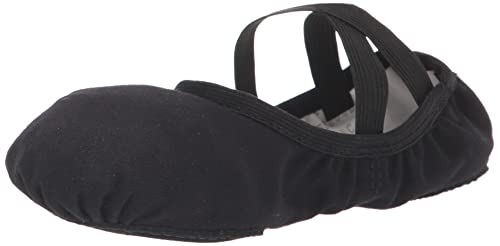
Bloch · Split sole
A low-profile stretch-canvas option for dancers who want the upper to follow the foot closely.
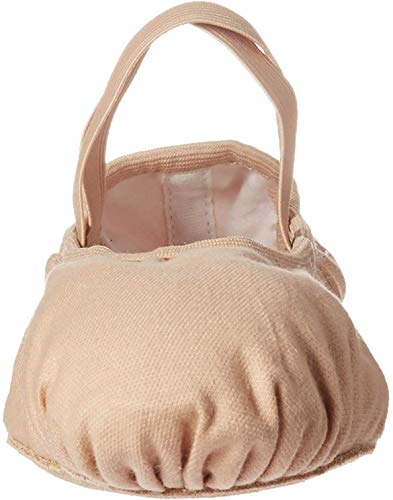
Bloch · Split sole
A men’s sizing route for the Performa family; confirm the seller’s chart before ordering.

Bloch · Full sole
A full-sole leather Belle listing with elastic topline; use the current model chart before ordering.
Bloch · Full sole
A child-oriented full-sole leather Belle listing for programs that request traditional construction.

Capezio · Split sole
A selected child and light-pink Hanami variation; confirm the exact size scale and shade.
Capezio · Split sole
The black color route for dress codes or performance needs that specify black slippers.
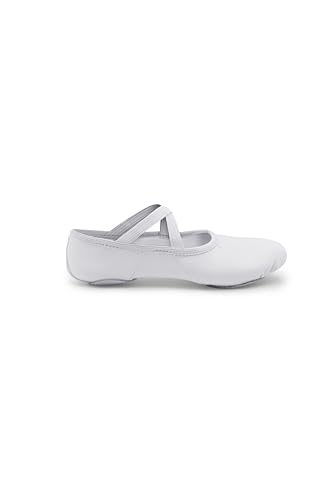
Capezio · Split sole
A child listing in the Hanami line; teacher rules still determine color and sole.
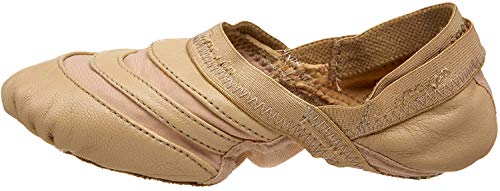
Capezio · Split sole
A flexible canvas option designed for articulation rather than first-class full-sole structure.
The two decisions that matter first
| Choice | Usually feels like | Useful when | Check first |
|---|---|---|---|
| Canvas | Light and breathable | Frequent class, value, easier care | Studio allows canvas |
| Leather | Structured, molds over time | Durability and traditional uniforms | Care and stretch |
| Full sole | Continuous resistance | Often children and beginners | Teacher requirement |
| Split sole | Flexible through the arch | Often experienced dancers | Program permits it |
The rehearsal notebook
Fit & care
Fit & care
Fit & care
Fit & care
Fit & care
Fit & care
Fit & care
Fit & care
Fit & care
Fit & care
Fit & care
Fit & care
Fit desk
Soft ballet shoes should feel snug and smooth without crushing the toes. Toes should lie flat, the heel should stay secure, and excess fabric should be minimal. Pain, numbness, curling toes, or deep pressure marks are warning signs.
Many children’s and beginner programs request full soles, while some adult programs allow split soles. The correct answer is the one in your studio dress code or from your teacher.
Canvas is light, often less expensive, and easier to air or clean. Leather is durable and molds with wear. Stretch canvas gives a close line. None is universally best; class rules and fit matter more.
Usually not. Conversion varies by brand, model, width, age range, and whether the listing uses women’s, men’s, or children’s sizing. Start with the exact model chart and check the shoe on both feet.
A first pointe pair should be selected through an in-person professional fitting after teacher approval. Pointe readiness cannot be determined by age, a quiz, or an online article.
One clear rule
Use our shortlist, then test both feet standing, pointing, and in a gentle demi-plié. If a teacher’s uniform requirement differs from this site, follow the teacher.
Open the decoder